Lighting
Dartboard lighting: how to light a board without shadows
How to light a dartboard at home: why ceiling lights cause shadows, LED ring lights versus overhead lights, brightness, glare, power and fitting with a cabinet.
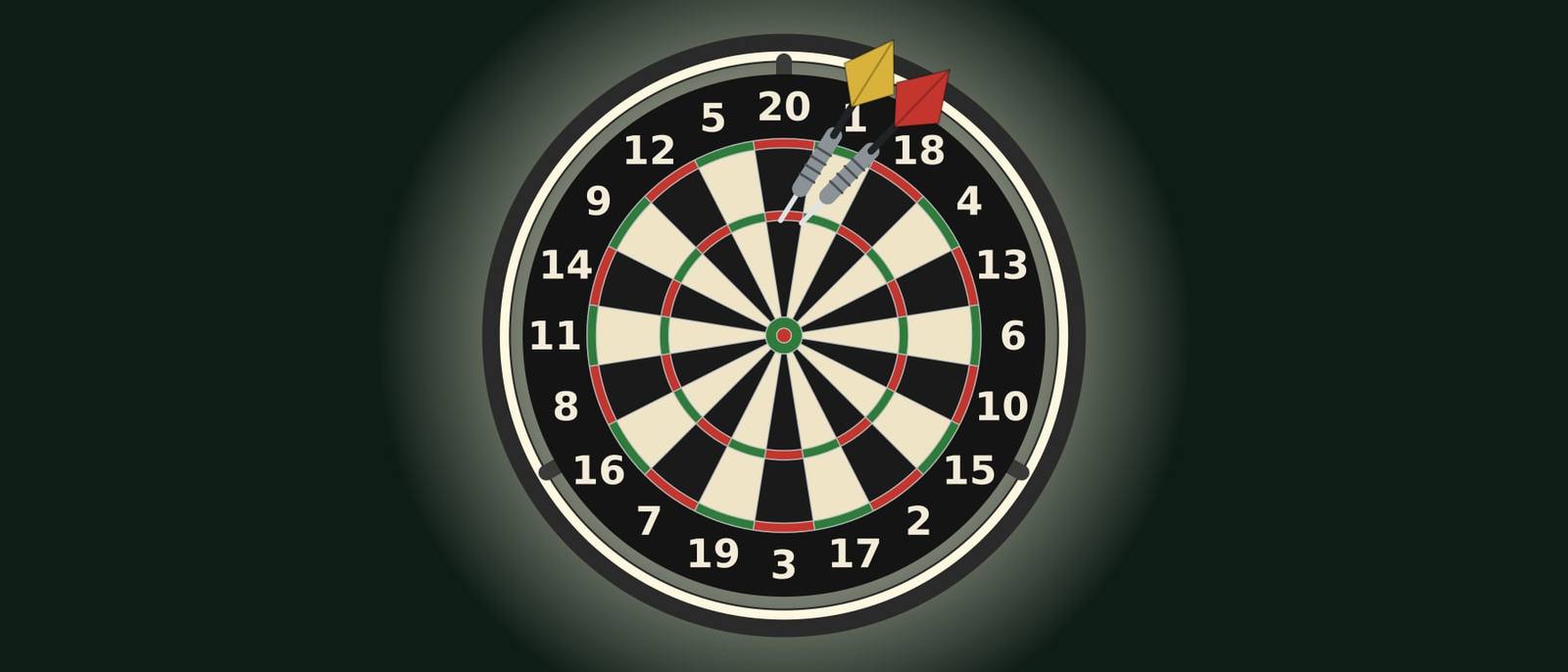
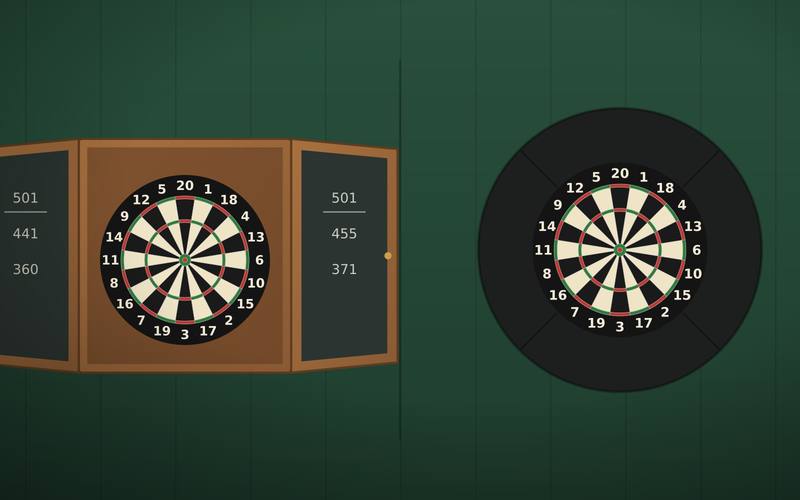
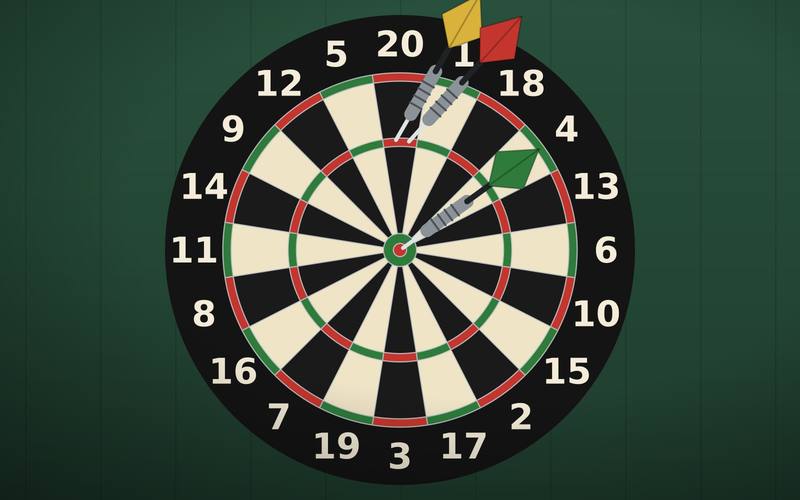
Bad light is the most common weak spot of a home darts setup. The board is hung at the right height, the line is in the right place, and then a single ceiling bulb throws a dark stripe across the treble 20 every time the first dart lands. This guide explains why that happens and how to fix it.
Why ordinary room lighting does not work
A dart sticks out of the board by several centimetres. Light coming from one direction hits the dart and leaves a shadow on the other side. With a ceiling light above the board, every dart throws a shadow downwards, often straight across the segment below. With a light behind the thrower, you throw your own shadow onto the board as you lean in.
Shadows do two things to your game. They hide parts of the segments, especially the narrow double and treble rings. And they make it harder to see exactly where a dart has landed, which matters most on the doubles at the end of a leg.
The fix is light that comes from close to the board and from more than one direction.
What the rules ask for
For tournament play the World Darts Federation rules set a minimum: each floor board is lit by a suitably positioned light fitting of at least 1,600 lumens, and stage boards by at least two such fittings. The fittings must have screens that keep the light out of the player's eyes at the oche, and organisers are told to avoid introducing shadows on the board.
Those three points, enough light, no glare and no shadows, are a good checklist for home as well.
The options
LED ring lights
A ring light fits around the board, usually just outside the number ring, and shines inwards from all 360 degrees. Because the light comes from every side at once, the shadow each dart casts from one direction is filled in by light from the opposite direction. The result is an evenly lit board with almost no shadows.
Ring lights have become the standard for home setups because they solve the problem at the source and fix to the board bracket, so there is nothing extra to mount above the board. The light points at the board, not at you, so glare is rarely an issue.
Overhead and arm lights
An overhead light sits above the board on a bracket or arm and shines down onto it. Two-headed versions light the board from above left and above right. They light the face of the board well and can look smart with a cabinet. The downside is that light from above still leaves short shadows below each dart.
Lights built into a cabinet
Some dartboard cabinets have an LED strip in the top. They are neat, with one unit to hang and no separate lamp, but the light comes from one direction, so you get the same short downward shadows as with an overhead light. You can add a ring light inside many cabinets for even light from all sides.
Two spotlights from the sides
If you have spotlights or track lighting, two lights aimed at the board from the left and right, well in front of it, reduce shadows a lot. This takes more fiddling to get right, and the lights must be placed so that they do not shine into the thrower's eyes.
What to look for in a dartboard light
- Fit. A ring light has to fit the board, a standard 451 mm bristle board in most cases, and whatever surrounds it. Check the inner diameter, the outer diameter and the depth if the board sits in a cabinet.
- Brightness. Compare lumen figures where they are given. The WDF tournament minimum of 1,600 lumens is a useful reference.
- Evenness. More LEDs spaced closely around the ring give smoother light than a few bright points.
- Colour of the light. A neutral white shows the board's colours naturally. Strongly warm or tinted light can make the red and green rings harder to tell apart.
- Glare. The light should point at the board. If you can see bright LEDs from the oche, they will distract you.
- Power. Mains adapters and USB are best for regular play. Battery lights avoid a cable but need charging, and the light can fade as the battery runs down.
- Fixing. Most ring lights mount on the dartboard bracket. Some clip onto the board or a surround.
Fitting a ring light
- Take the board off the wall.
- Fit the ring light's mounting parts to the board bracket, following the instructions.
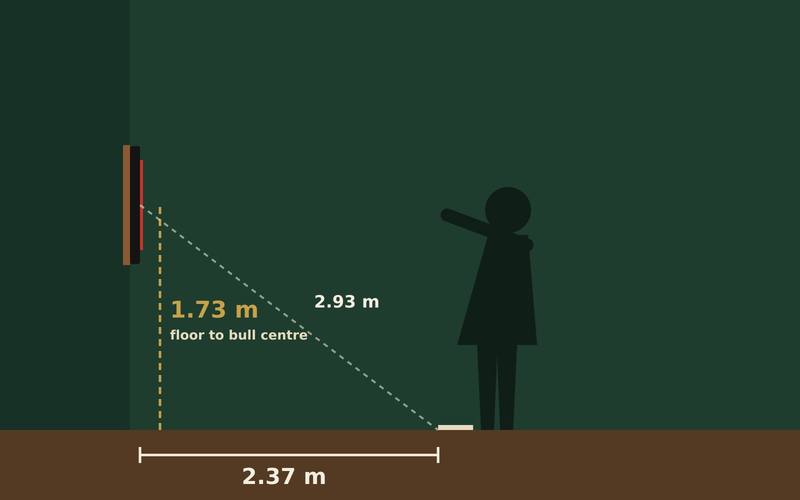
- Hang the board again and check that the centre of the bull is still at 1.73 m and the 20 is at the top. Some mounting kits move the board slightly.
- Route the cable to the socket. Cable clips or a short length of trunking keep it flat against the wall.
- Turn the light on, throw three darts at the 20 and three at the 3, and look at the segments from the oche. You should see no dark stripes next to the darts.
If you use a surround, check that the ring and the surround fit together. Most ring lights sit just outside the number ring, inside or on top of the surround's inner edge.
Lighting for camera scoring
Camera scoring kits rely on light even more than you do. Shadows can confuse the cameras about where a dart has landed. That is why most kits put the cameras in their own LED ring. If you plan to add camera scoring later, check whether the kit will replace your ring light or needs to fit around it.
The rest of the room
A brightly lit board in an otherwise dark room is easy on the eyes for some players and tiring for others. If you find yourself squinting, leave some room light on as well, placed so it does not shine on the board from one side or into your eyes at the line. Avoid a bright light directly behind the board, where it shines straight at you.
Common lighting mistakes
- Relying on the ceiling light. It is in the wrong place for darts: above and behind the board, or above and behind you.
- One lamp from one side. It brightens the board but moves the shadows rather than removing them.
- Lights you can see from the oche. A bare bulb or LED strip in your eye line pulls your focus away from the target.
- Fitting the light and not re-checking the height. Ring light mounts can move the board on its bracket. Measure the bull again afterwards.
- A dangling cable. It catches feet and dropped darts. Clip it to the wall or run it in trunking.
- Battery lights left to fade. As the battery runs down, the board gets dimmer without you noticing. Charge it regularly, or use mains or USB power for a board you play on most evenings.
Quick checklist
- Light from close to the board and from more than one direction.
- No bright light in your line of sight at the oche.
- Enough brightness to read the doubles easily, with lumen figures as a guide.
- Bull still at 1.73 m after fitting the light.
- Cable tidy and out of the way of feet and darts.
An LED ring light is the simplest way to tick every box. Have a look at our dartboard lights, or read How to set up a dartboard at home for the full setup.
Frequently asked questions
What is the best light for a dartboard?
For most home setups, an LED ring light that fits around the board. It lights the board from all sides at once, so darts do not cast shadows over the segments. Overhead lights work too, but leave short shadows below each dart.
How many lumens does a dartboard light need?
World Darts Federation rules ask for a light fitting of at least 1,600 lumens per board in tournament play. At home, even light without dark patches matters more than the highest number, but lumens are a good way to compare lights.
Why does my dartboard have shadows?
Because the light comes from one direction. A ceiling light above or behind you casts the shadow of each dart, or of you, onto the board. Light from several directions, as from a ring light, cancels the shadows out.
Can I use a ring light with a dartboard cabinet?
Often yes, but the light adds width and depth around the board. Compare the inner size of the cabinet with the outer diameter and depth of the ring before buying.