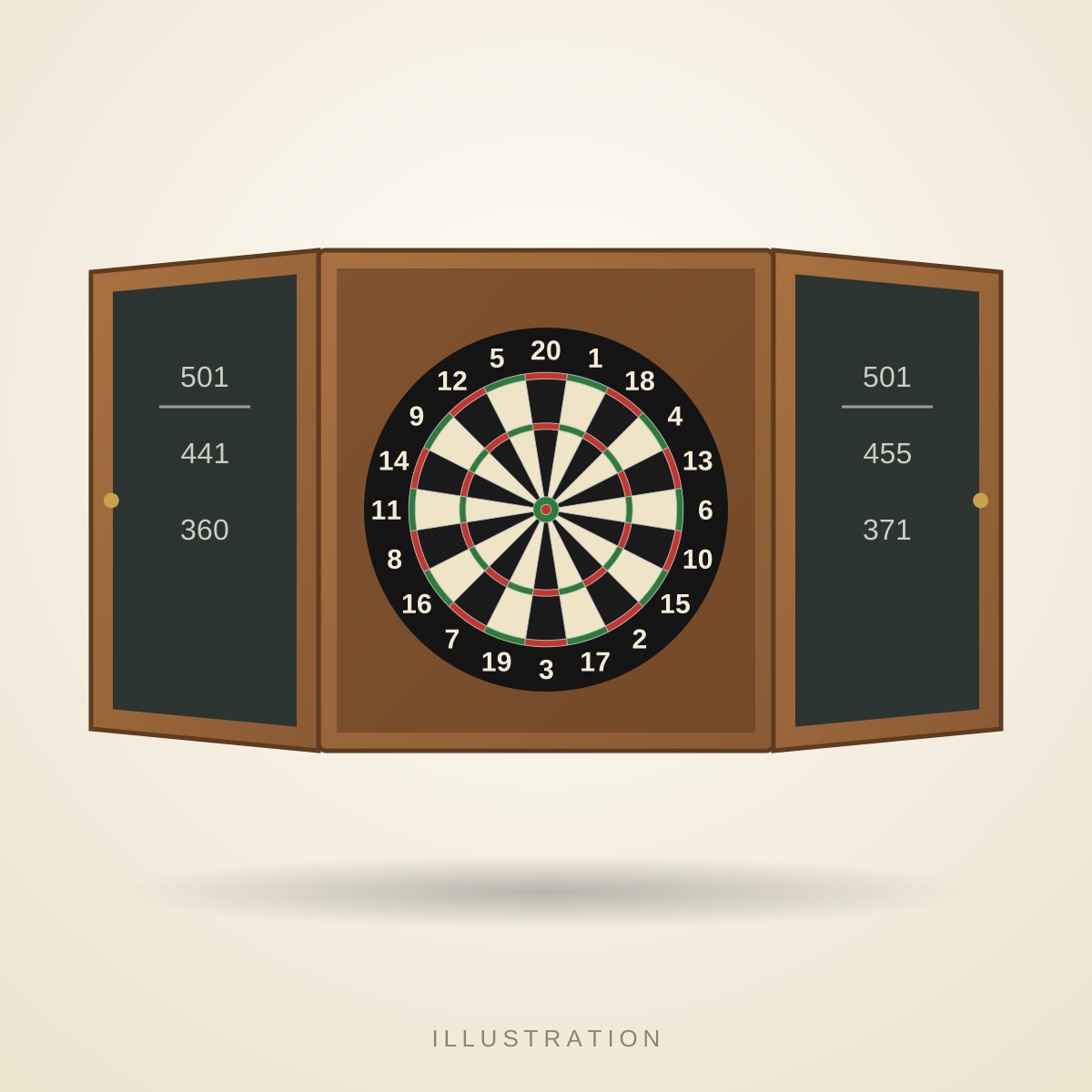
Wooden dartboard cabinet with chalk scoreboards
Fits 451 mm boards Chalk scoreboards Soft backboard Wall-mounted
Available soon
2 products
A cabinet frames the board with a backboard and two doors. It catches the darts that miss, the doors double as scoreboards, and when you close it the board disappears into a piece of furniture.
Compare all models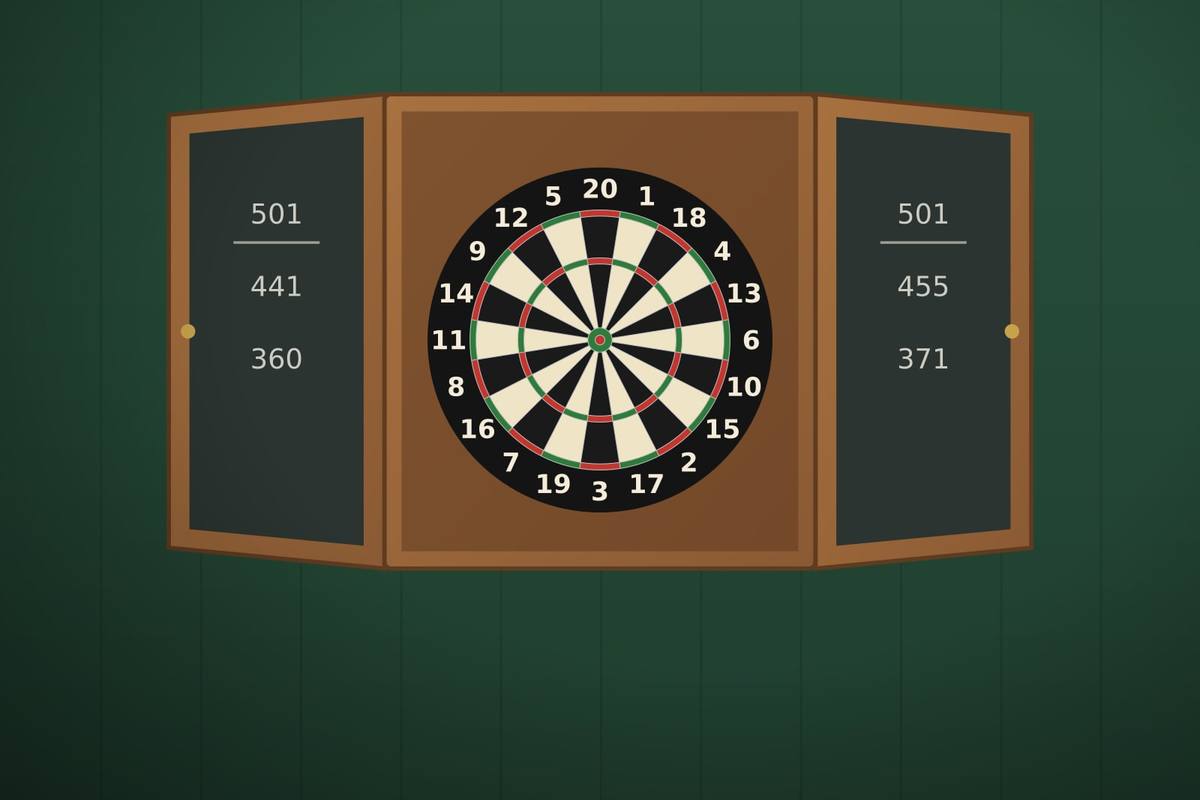
Fits 451 mm boards Chalk scoreboards Soft backboard Wall-mounted
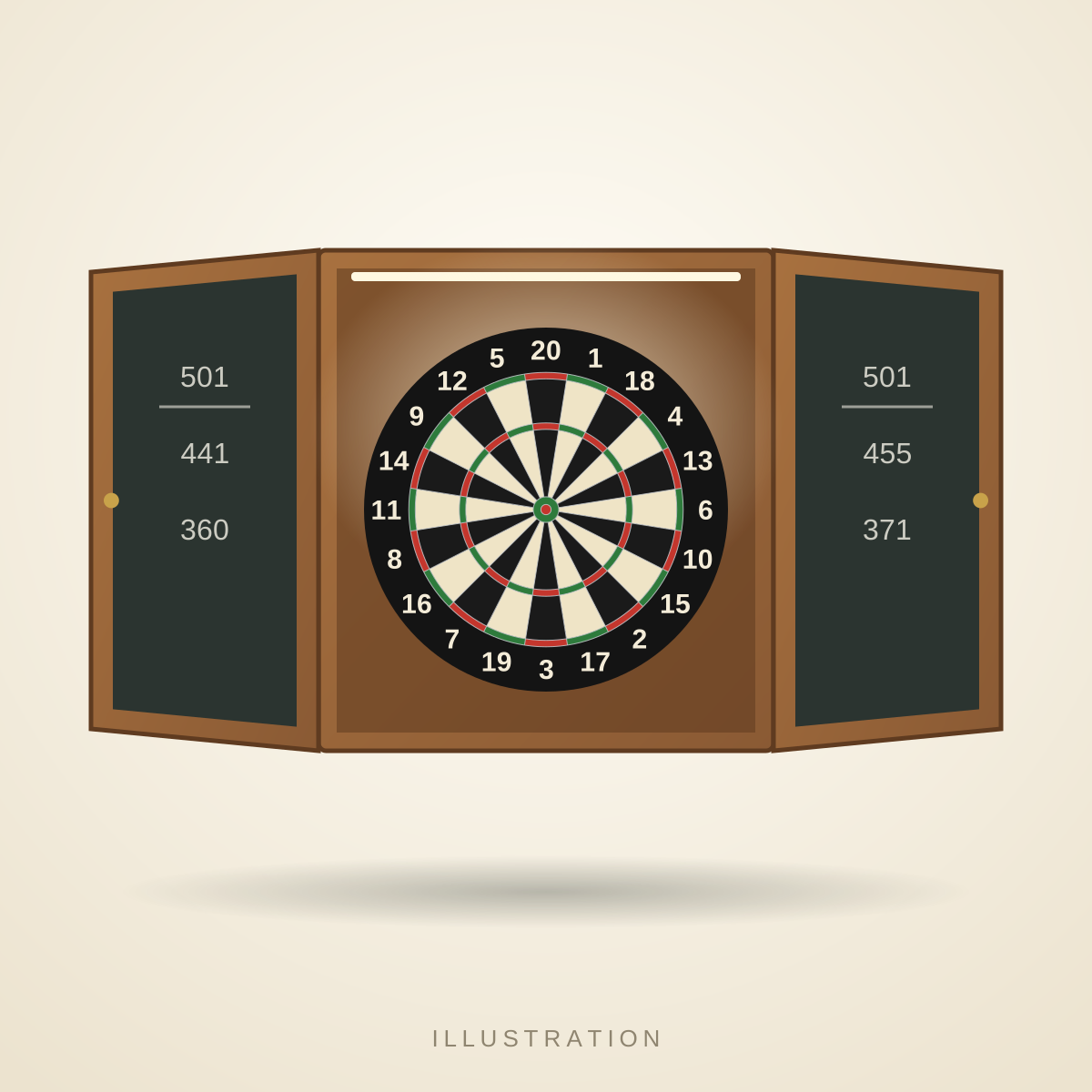
Fits 451 mm boards Built-in LED Chalk scoreboards Wall-mounted
What counts is the bull, not the cabinet. Fit the board first, then hang the cabinet so the centre of the bull sits 1.73 m above the floor. The throw line is measured from the face of the board, which sits a few centimetres in front of the wall once it is inside a cabinet. The full method is in How to set up a dartboard at home.
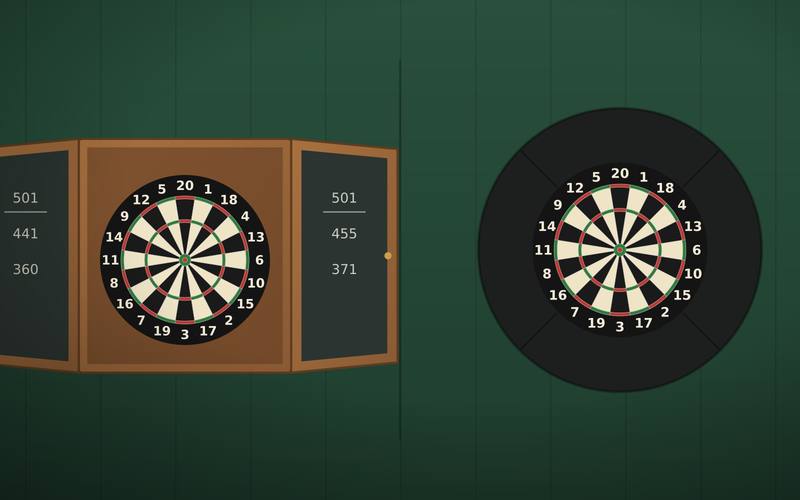
Weighing up a cabinet against a surround? Our comparison Dartboard cabinet or surround walks through wall protection, space and looks.
Buying advice
Dartboard cabinet or surround? How much wall each protects, the space they need, scoreboards, lights and camera kits, and which suits your room and players.
Hang it so that the centre of the bull, not the top of the cabinet, is 1.73 m above the floor. Fit the board in the cabinet first, mark the bull height on the wall, then line up the fixings from there.
Plan for about twice the closed width once both doors are open, plus a little clearance so the doors do not knock into anything. The exact open width is listed in the specifications of each cabinet.
Usually not. Standard cabinets are made for a 451 mm bristle board, while electronic boards come with a housing and a display that need more room. Some electronic boards come in their own cabinet.